
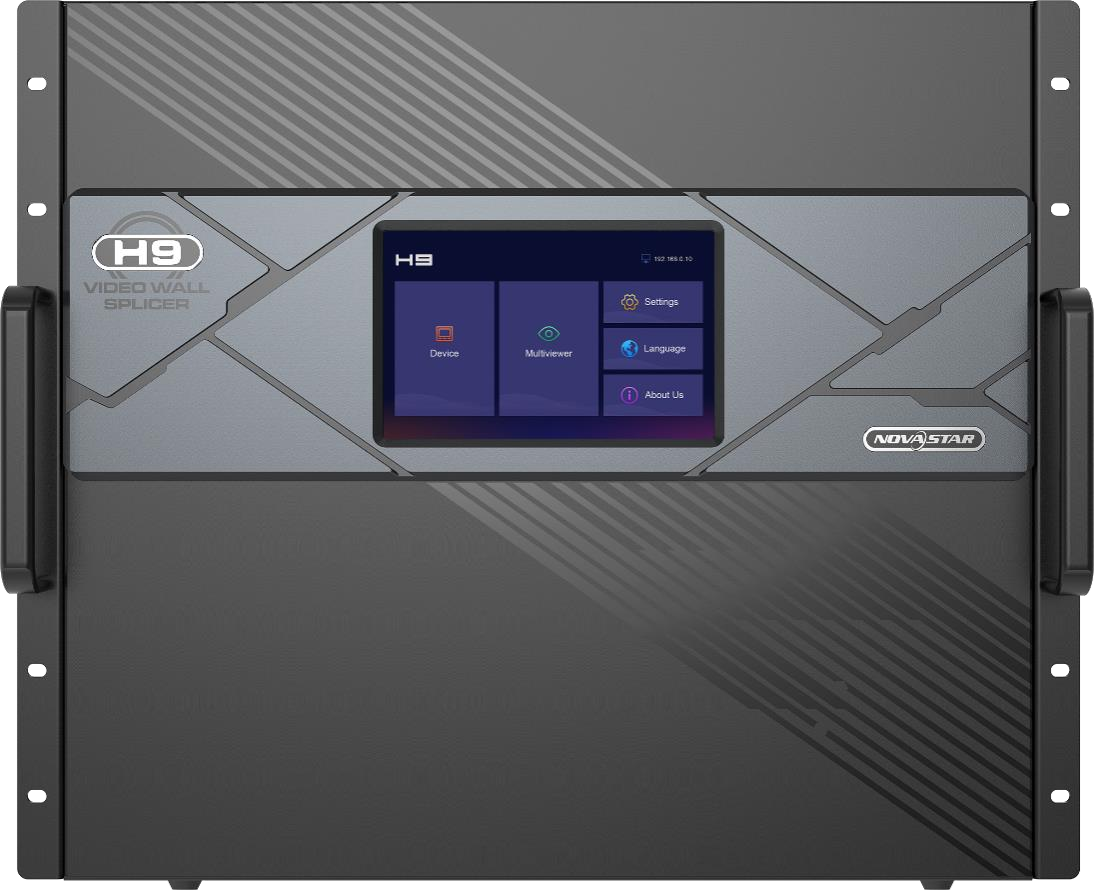
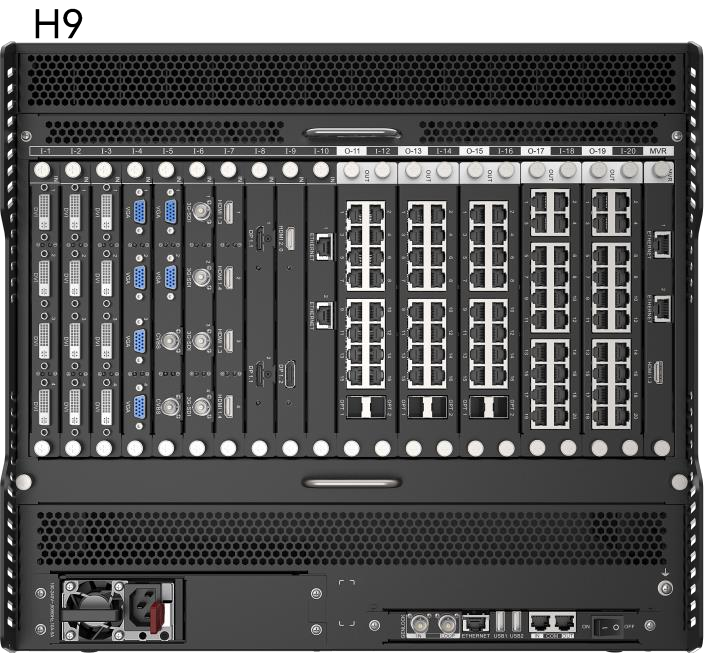
What is NovaStar H9 video wall splicer?
The NovaStar H9 video wall splicer is a 9U modular chassis for a control, presentation or broadcast space where a large source list must stay ready and appear in planned screen layouts. Installed input cards bring computers, camera feeds, media servers and dashboards into H9. H9 positions those sources across the display; the selected output route then sends the finished picture either to LED cabinets or to separately fed video displays.
Choose H9 when the completed design needs up to 15 input cards and 80 layers in a 9U rack. For LED cabinets, it supports up to five LED 4K sending cards; for separately fed video displays, it has a distinct five-card video-output limit. It suits an operations wall, a multi-screen briefing center or a large experience space whose source and display plans have outgrown a smaller chassis.
Request H9 bulk pricing →
For confirmed multi-H9 or project quantities. Direct checkout remains available when the required cards are already specified.
NovaStar H9 video wall splicer key features: what makes it different?
- Keep the room’s working feeds connected: H9 has room for up to 15 input cards and 60 input channels. A control room can keep its dashboards, camera group, presentation computer and switcher feeds ready, rather than changing connections whenever the room changes use.
- Build a deliberate multi-screen picture: up to 80 layers let an operator place a main program, camera view, title area and data window in a planned layout. The display can serve the people watching it instead of simply passing one source through.
- Choose the route for the displays you actually have: five LED 4K sending-card positions serve LED cabinets, while video output cards serve separately fed displays. The installed card family—not the empty chassis—sets the usable pixel total and the cabinet-side connection plan.
- Return the room to known layouts: H9 supports presets, web control and multi-screen management. That is useful when an operations wall, briefing room or experience center moves between repeatable display states throughout the day.
- Make a fixed room easier to maintain: H9 ships with one power supply, and a redundant supply can be specified when keeping the wall running is critical. Input and output cards are hot-swappable, while web control and saved presets help the operator return to a known display layout.
NovaStar H9 specifications
These are the fixed H9 chassis limits for rack space, card positions and layers. LED pixel capacity changes with the output-card family, so the published card-dependent totals appear in their own section.
NovaStar H9 input cards, video output cards and LED output cards
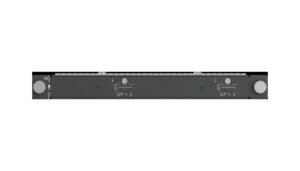
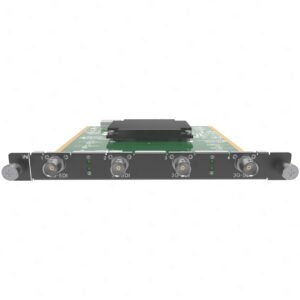
H9 sits between the source equipment and the completed displays. Input cards bring the actual sources into H9. The finished layout can leave through video output cards for separately fed displays, or through LED output cards—called sending cards in NovaStar material—for LED cabinets. These are two different output plans, so decide which displays the system must feed before selecting cards.
Browse the H Series category for the relevant source connector or cabinet path. An H9 order is strongest when the actual sources, five-card output plan, cable or fiber route and receiving-card configuration have been checked together.
If the finished system fits ten input cards, three LED output cards and 48 layers in 5U, compare NovaStar H5 before moving to the larger H9 chassis.
How NovaStar H9 connects video sources to LED cabinets
For an LED wall, follow this sequence: bring each source in, build the display layout, then map that finished layout onto the cabinets. Separately fed video displays use their own selected video-output route after the layout step.
Bring the selected sources into H9
Connect each computer, media server, switcher or camera to its matching installed input card. H9 provides card positions; it does not include every source connector on an empty chassis.
Arrange the screens and layers in H9
H9 places the live sources across the required LED-screen layouts. A source can fill a large canvas or sit as a planned layer beside other content.
Send and map the LED picture
For an LED wall, the selected LED output cards send the completed layout through the planned RJ45 or fiber paths. The cabinet receiving-card configuration and physical port order then map that picture onto the installed LED wall.
NovaStar H9 maximum pixel capacity by LED output card
H9 has five LED 4K sending-card positions, so an empty chassis has no single pixel total. Every figure below assumes five matching LED sending cards in the listed cabinet-output route. A mixed card plan, fiber mode or cabinet layout must be checked against its actual installation.
The 130-million-pixel standard-H9 total requires five enhanced H_4xFiber sending cards: one in every H9 LED output-card position.
Compare the card-level details for the H_16xRJ45+2xFiber output card, H_20xRJ45 output card, H_4xFiber output card and H_4xFiber sending card (Enhanced). Capacity is only one check: the connector route, optical modules where used, cable plan and cabinet receiving-card configuration must also fit the installed wall.
NovaStar H9 applications for multi-screen LED walls
H9 fits these fixed installations when the source list, output route and available 9U rack space are already defined:
Operations and control room
Keep camera groups, dashboards, alerts and a full-screen program available in one planned display. H9 fits when the real source plan needs more card room and output capacity than a smaller chassis can provide.
Broadcast or virtual-production wall
Build a large main canvas with a confidence view, a camera feed or a data panel where it belongs. The 80-layer limit gives the operator a defined space to compose the intended picture instead of changing the physical source path.
Multi-screen briefing center
Bring a presentation computer, a live meeting feed and operating data into one system, then return to repeatable layouts for each meeting or briefing format.
Large experience or demonstration space
Move from a full-screen product story to a live demo and supporting data on several LED screens. H9 is appropriate when the final source list, output-card plan and rack space genuinely call for a 9U chassis.
NovaStar H9 vs H9 Enhanced: output-card slots and layer capacity
Standard H9 and H9 Enhanced share the same 9U height, 15 input-card positions and five LED 4K sending-card positions. H9 Enhanced earns its place only when separately fed video displays need more than five video-output cards, more than 80 video-output layers, or the higher fiber-card ceiling listed by NovaStar. Its ten-card figure does not apply to LED sending cards.
Choose NovaStar H9 Enhanced only when that final system plan uses the additional capacity. Otherwise standard H9 keeps the same 9U format, 15 input-card positions and five LED 4K sending-card positions without buying unused expansion.
NovaStar H9 setup and receiving card compatibility
H9 and NovaLCT take care of different parts of an LED installation. H9 arranges the selected sources on the final display. The selected LED output card, cable or fiber connection and receiving-card file tell each cabinet which part of that finished layout to show.
- Inside H9: install the selected cards, define the screens and place source layers in the H9 interface.
- At the cabinet side: use NovaLCT for the LED-screen configuration associated with the selected H Series output-card path.
- Before commissioning: confirm that the output-card connector, cable or fiber route, cabinet order and NovaStar receiving cards configuration all describe the same physical LED wall. A correct H9 layout cannot correct a mismatched receiver file or an incorrect cabinet connection order.
NovaStar H9 manual, datasheet and H Series firmware
The H9 specification is an exact model document. The manual, firmware and release notes are published for the H Series family and are labelled that way below, so it is clear what each resource covers.
NovaStar H9 specifications (PDF, V1.16)
Exact official H9 chassis facts, compatible-card list, capacity, dimensions and electrical specifications.
NovaStar H Series user manual (PDF, V1.15.0)
H Series family manual for configuration and operating procedures; it is not an H9-only manual.
NovaStar H Series firmware (ZIP, V2.2.0.0)
Verified H Series family firmware package, not a file presented as H9-only firmware.
NovaStar H Series firmware release notes (TXT, V2.2.0.0)
Version changes and update notes for the same verified H Series family firmware package.
NovaStar H9 FAQs
Is the NovaStar H9 a complete LED wall system?
No. H9 is the rack-mounted chassis that combines the parts of an H Series system; by itself, it has no source connector and no cabinet-data path. A working LED wall also needs the selected input cards, the selected LED output cards and the receiving-card configuration that matches the installed cabinets.
Does the H9 price include input cards and LED output cards?
The H9 is sold as the chassis. Input cards and output cards are selected separately so their connectors, channel count and cabinet route match the installed project.
How many live sources can H9 accept?
H9 accepts up to 15 input cards and 60 input channels. The number of sources in a real design depends on the installed card types: one card can carry a different number of independent feeds from another.
Does five H9 output-card positions mean five cabinet ports?
No. Five is the number of output-card positions. Each installed LED output card has its own cabinet-side connector design, so the selected card family determines the actual RJ45 or fiber paths.
What is the maximum LED pixel capacity of H9?
It depends on the five installed LED output cards. The published standard-H9 totals range from 52 million to 130 million pixels. The 130-million-pixel total requires five enhanced H_4xFiber sending cards, one in every H9 LED output-card position.
What do 80 H9 layers help an operator do?
Layers are the picture areas placed on the LED canvas. They let a program image fill a screen while camera, data or title windows stay in their intended positions. The actual number needed depends on the planned screen layout.
What is the difference between H9 and H9 Enhanced?
Both are 9U and both allow up to 15 input cards. H9 Enhanced doubles the maximum video-output-card count from five to ten and raises video-output layers from 80 to 160. With LED 4K sending cards, both models list five cards and 80 layers; the published fiber-card capacity ceiling is higher on H9 Enhanced.
Does H9 include redundant power?
No. H9 includes one power supply; redundant power is an optional configuration. Specify that option before ordering when the installation needs power-supply backup.
Where are H9 receiving cards and cabinet mapping configured?
Use H9 to create the source layout and screen arrangement. For the LED cabinet side, use NovaLCT to match the selected output card and physical route with the cabinet receiving-card configuration and actual cabinet connection order.
Are the H9 manual and firmware model-specific?
The H9 specifications PDF is an exact model document. The manual, firmware ZIP and release notes above are verified H Series family resources, and their titles make that coverage clear.
Reviews
There are no reviews yet.