
What is the NovaStar MX2000 Pro for?
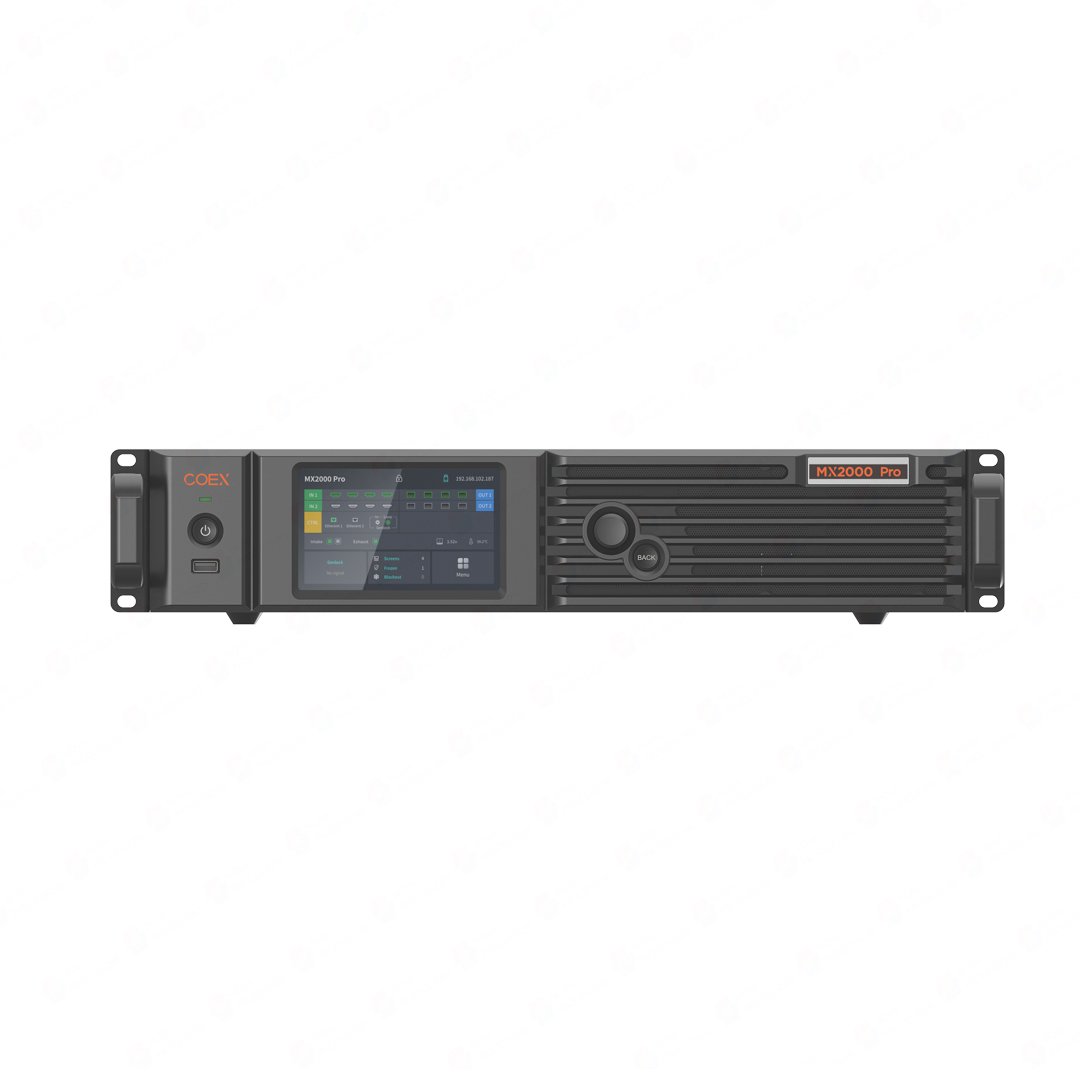
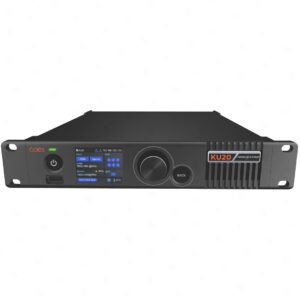
The NovaStar MX2000 Pro is a 2U modular COEX LED controller. It becomes a complete control system only after the project chooses its two input cards and two output cards: the input cards accept the real source formats, and the output cards define the route toward the LED receiving-card/cabinet system.
It is the right scale for a configurable 8K-class project that does not require the eight-by-eight expansion of the MX6000 Pro. The chassis itself provides the processing, screens, layers and VMP workflow; the card plan determines what the system can connect to and how the LED data leaves the rack.
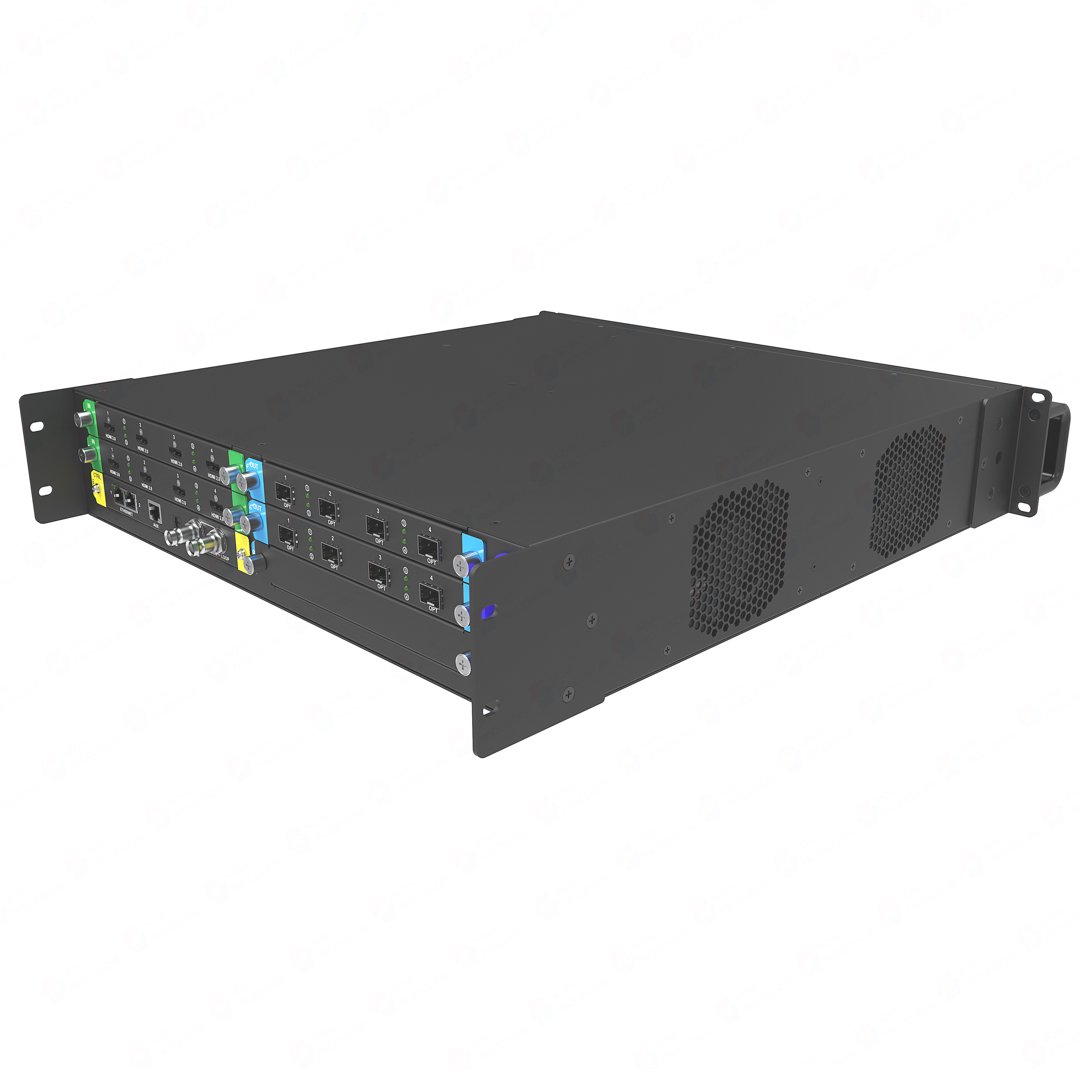
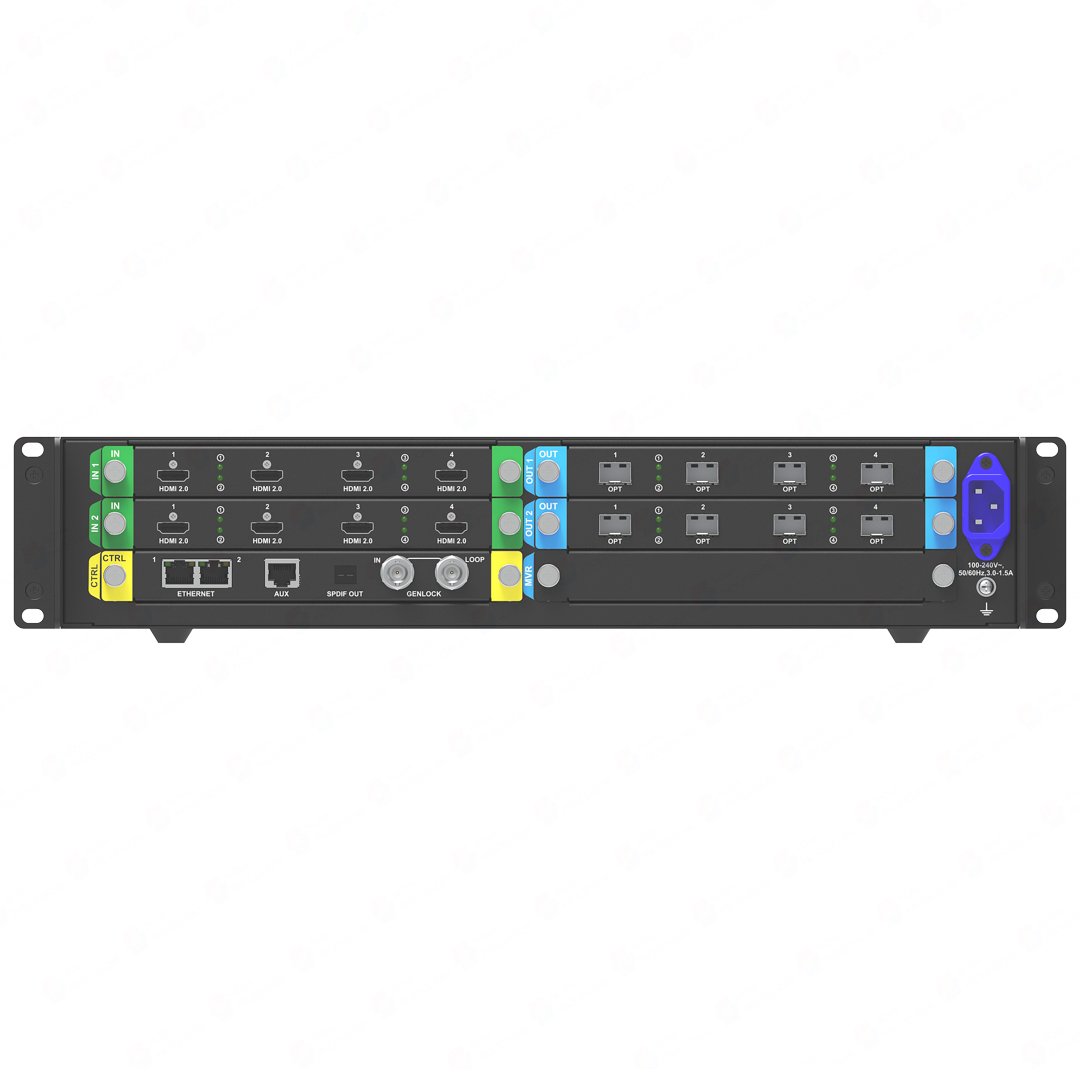
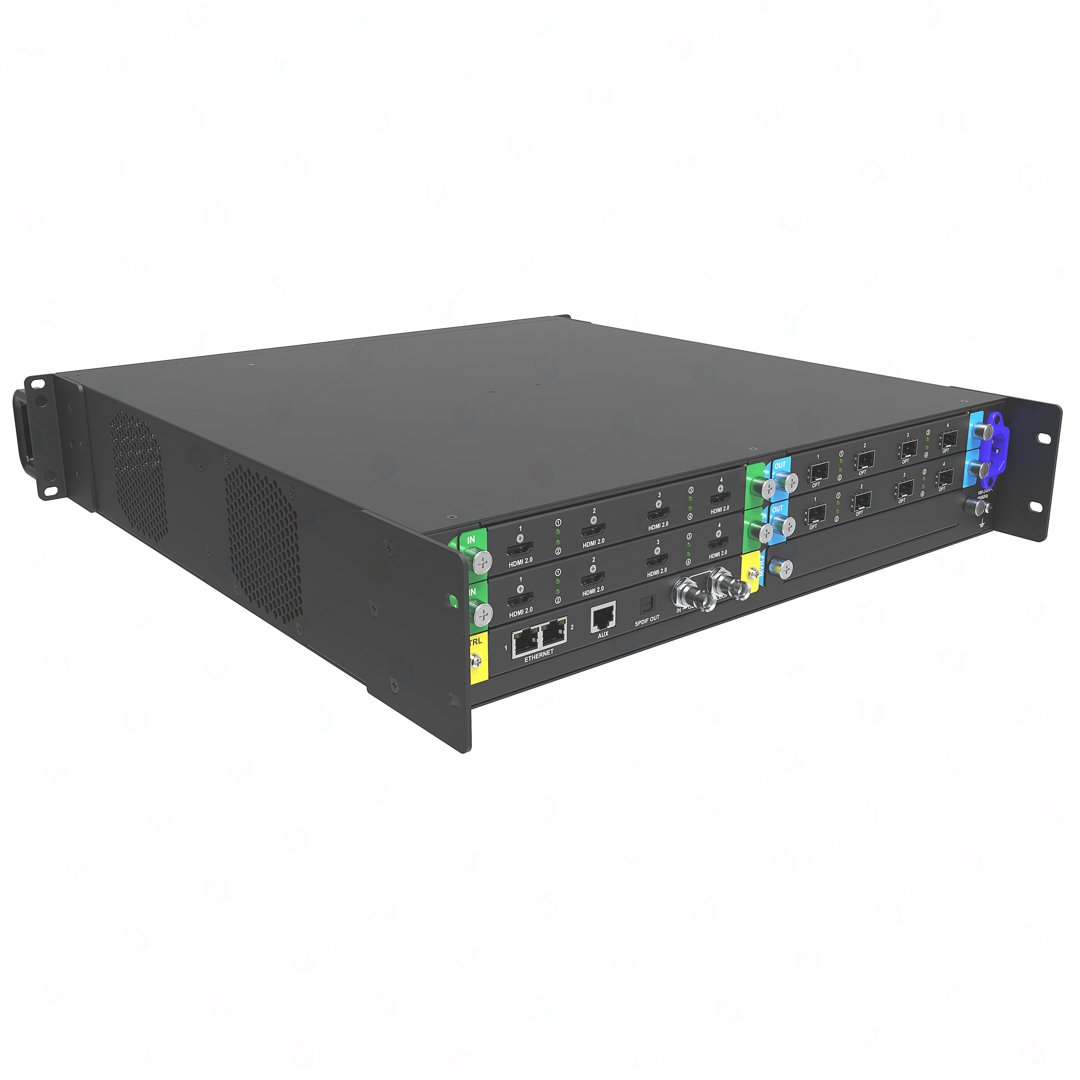
NovaStar MX2000 Pro input and output card slots
Buying the chassis is only the first choice. Make a four-position card plan before comparing price or total pixels.
| Slot decision | Question to answer before ordering |
|---|---|
| Input slot 1 and 2 | Will the show deliver HDMI, DisplayPort, 12G-SDI, 8K or ST 2110? A four-input card still uses one input slot; it does not create LED outputs. |
| Output slot 1 and 2 | Does the cabinet plan use a 1G path through 10G fiber/CVT10, a 5G path through 40G fiber/CVT8-5G, or 5G Base-T? The chosen output card and endpoints decide this. |
| Card and VMP version | Record the card model, slot position and firmware. A saved VMP project must match those details before it is imported to a card-based controller. |
| Backup path | Decide whether source, device, Ethernet or fiber backup is required while the cards and endpoints are still being specified. |
NovaStar MX2000 Pro specifications: slots, inputs and pixel capacity
These chassis limits describe the working envelope. The selected card types supply the actual connectors and LED transport path.
| Chassis / slots | 2U chassis with 2 input-card and 2 output-card slots |
|---|---|
| Input scale | Up to 8 x 4K@60 Hz or 4 x 8K@30 Hz with supported input-card configurations |
| Maximum stated LED load | 35.38 million pixels total |
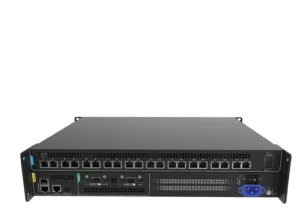
| Output-card families | 4 x 10G fiber with CVT10 for 1G, 1 x 40G fiber with CVT8-5G for 5G, or 8 x 5G Base-T |
| Screens / layers | Card-based screens, synchronised output splicing and up to 8 x 4K layers (4 per output card) |
| Workflow | VMP, backup functions and documented HDR, low-latency and image-processing features subject to the selected system configuration |
NovaStar MX2000 Pro input cards for HDMI, DP, SDI and ST 2110
Input-card choice should follow the source handoff, not a generic ‘8K’ label.
| Source environment | Card family to evaluate | Practical result |
|---|---|---|
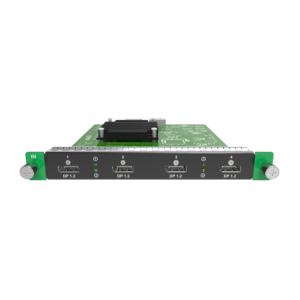
| 4K HDMI, DP or 12G-SDI production sources | MX 4-input HDMI 2.0, DP 1.2 or 12G-SDI cards | Bring several conventional sources into one input slot, with the source standard—not LED capacity—setting the choice. |
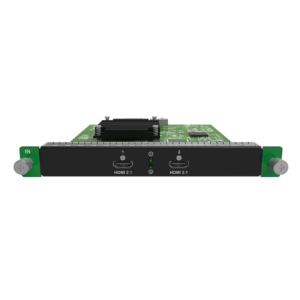
| High-resolution baseband graphics or playback | MX 8K HDMI 2.1 and/or DP 1.4 input cards | Select one 8K60 DP path, two 8K30 paths or a mixed DP/HDMI card according to source count, connector type and refresh requirement. |
| ST 2110 broadcast IP plant | MX 25G or 100G ST 2110 cards | Specify primary/backup topology, PTP/NMOS/FEC and optics with the network team before the source can appear in VMP. |
An input card only brings video into the chassis. Output cards, receiving cards and the cabinet map still determine how that picture reaches the LED wall.
NovaStar MX2000 Pro output cards: 1G, 5G fiber and Base-T
The output-card decision connects processing to the wall. It must match the receiving-card/data architecture, converter type and site endpoints.
| Documented output card | System decision it supports |
|---|---|
| 4 x 10G fiber output card with CVT10 | Plan a 1G receiving-card path through the specified converter and fiber endpoint. Do not treat the 10G optical link as a cabinet-side 5G upgrade by itself. |
| 1 x 40G fiber output card with CVT8-5G | Plan the 5G receiving-card/cabinet architecture, converter and 40G fiber endpoint together. |
| 8 x 5G Base-T output card | Use when the physical 5G copper cabinet route and its endpoints are part of the project design. |
NovaStar MX2000 Pro screens, layers and capacity
The MX2000 Pro supports card-based screens, synchronised output splicing, layer roaming and up to eight 4K layers across the selected output cards. In a show environment, that lets an operator keep separately assigned screens and layers inside one planned system instead of treating every output as an unrelated wall.
The 35.38-million-pixel rating is the total chassis limit. Finish the design by mapping which output-card ports belong to each screen, checking the capacity per selected path, and confirming the receiving-card/cabinet configuration. This is where a modular system prevents an impressive total number from hiding an incomplete cable plan.
NovaStar MX2000 Pro backup and VMP software setup
VMP is where the MX2000 Pro project stores its screen map, layers, cards and device settings. Before a card change or replacement, save the working project and record the input/output-card number, slot, model and firmware.
- Device backup: decide which controller replaces which device and verify the supported controller/firmware combination.
- Source and Ethernet backup: document the primary and backup source/output routes end to end; a spare connector does not automatically become a valid backup.
- Fiber endpoint: match the selected output card, converter, transceiver/fiber type and receiving-side endpoint before the rack is installed.
When should you choose the NovaStar MX2000 Pro?
| Project | Why a configured MX2000 Pro is useful |
|---|---|
| Broadcast studio or control room | The input cards can be selected for the actual SDI, baseband or ST 2110 source handoff, while the output cards follow the receiving-card/fiber plan. |
| xR, virtual production or multi-canvas set | It provides a planned platform for card-based screens, layers and timing/image functions, provided the entire camera, source and LED system is documented as compatible. |
| Premium event or fixed installation | It fits a project that needs more than a fixed controller but can be deliberately allocated within two input and two output slots. |
| Many independent source/output families or future rack expansion | Move to the MX6000 Pro when the project genuinely needs eight input and eight output slots. |
NovaStar MX2000 Pro vs MX6000 Pro and fixed COEX controllers
The MX6000 Pro is not automatically the better model. It is the right model when the card map, source count, screen plan or output system needs its larger 8-in/8-out chassis.
| Requirement | Better fit |
|---|---|
| Two input and two output card positions are enough, with a 2U rack footprint and up to 35.38M pixels | MX2000 Pro |
| Up to eight input and eight output card positions, many screens, up to 32 4K layers or up to 141M pixels | MX6000 Pro |
| Source and output interfaces are fixed and the project does not need a card plan | Evaluate a fixed-I/O COEX controller such as MX40 Pro or CX40 Pro according to the LED data architecture. |
NovaStar MX2000 Pro Manual, PDF and Software
Find the MX2000 Pro manual, MX2000 Pro datasheet PDF and NovaStar VMP software here. The host manual explains chassis/card setup; input and output cards have their own scope and should be verified against the current host documentation.
Direct PDF links: MX2000 Pro Specifications V1.5.1 PDF · MX2000 Pro User Manual V1.5.1 PDF.
MX2000 Pro buying and setup FAQs
Does the MX2000 Pro include input and output cards?
The chassis is a card-based platform; specify the required input and output cards with the project. Confirm the exact product configuration rather than assuming a connector type is included.
How many card slots does the MX2000 Pro have?
Two input-card slots and two output-card slots. Plan source density and wall-output topology against those four positions before choosing the chassis.
Can one four-input card provide four LED outputs?
No. A four-input card brings four source connections into one input slot. LED data leaves through the selected output cards and follows the receiving-card/cabinet architecture.
Does MX2000 Pro support ST 2110?
Yes, with the appropriate optional ST 2110 input card. The IP fabric, primary/backup design, PTP, NMOS, FEC and optics still need to be planned with the broadcast-network team.
When is MX6000 Pro necessary instead?
Choose MX6000 Pro when the confirmed card plan needs more than two input or two output slots, or when its documented 8-in/8-out scale, layers and capacity are required.
MX2000 Pro order check
Before ordering a modular chassis, make the card map rather than only counting pixels:
- Each source is assigned to an exact input-card family and input-slot position.
- Each output slot is assigned to the required 1G, 5G fiber or 5G Base-T architecture, including converters and endpoints.
- The screen/output allocation, 35.38M total load and per-path cabinet map are documented.
- If ST 2110 is used, the primary/backup design, PTP, NMOS, FEC, switch ports, optics and fiber route are confirmed.
- The backup method is drawn end to end rather than inferred from unused ports.
- The VMP project, chassis firmware, card firmware, receiving-card firmware and cabinet files are matched.
Once the source cards, output architecture, screen map and software versions are confirmed, feel free to contact us. For volume pricing, we will make sure to give you a favorable bulk-purchase quote.
Reviews
There are no reviews yet.