
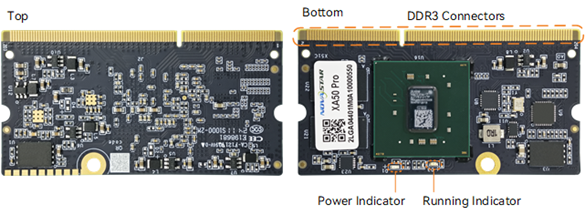
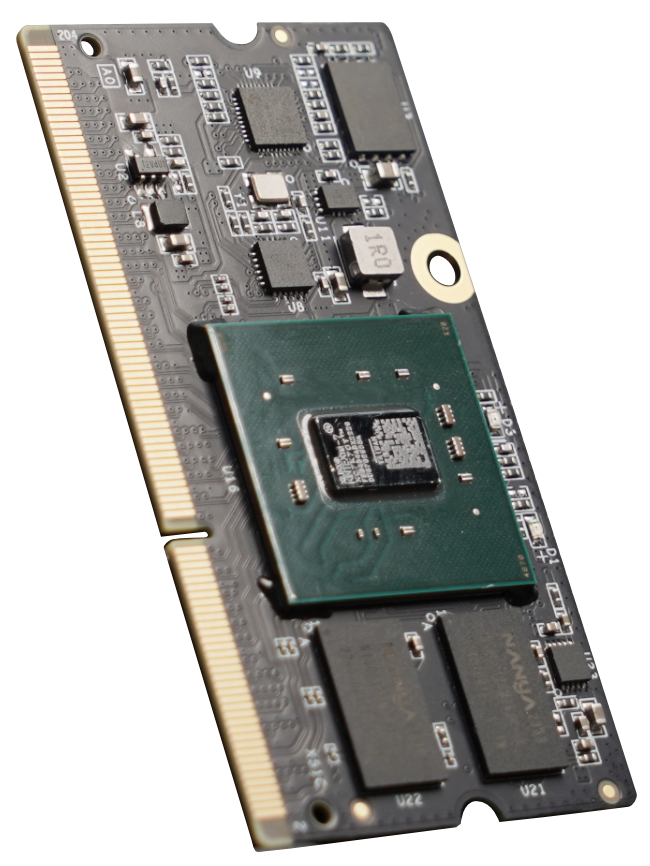
What is the NovaStar XA50 Pro 5G receiving card?
The NovaStar XA50 Pro is a high-end 5G receiving card for a COEX LED cabinet. It receives the data prepared by a compatible COEX system and sends it to the cabinet modules through the card’s DDR3 connector architecture. It is for a newly specified COEX cabinet or a like-for-like XA50 Pro replacement, not a plug-in upgrade for a 1G MRV, DH or A-series cabinet.
Its large one-card canvas is useful only in the right conditions. With PWM driver ICs, an 8- or 10-bit source can reach 1024 × 512 at 60 Hz. A 12-bit source changes the documented limit to 620 × 512. Before treating XA50 Pro as a way to reduce card count, confirm the 5G cabinet path, module driver, source bit depth, NCP file and thermal design together.
XA50 Pro key features
- 5G COEX and DDR3 cabinet architecture: it belongs in a cabinet and output path made for the XA50 Pro class of receiver. Firmware cannot turn a conventional 1G cabinet into this physical system.
- High-density capacity with a clear 12-bit tradeoff: 1024 × 512 at 8/10-bit and 620 × 512 at 12-bit let a designer weigh image depth against card count before cabinet wiring is fixed.
- Image tools with real operating conditions: Image Booster, thermal compensation, Dynamic Booster, HDR and calibration can improve a matching screen, while Shutter Fit is for camera work and one-frame receiving-card latency requires modules with driver ICs that contain RAM.
- NCP cabinet package support: in a COEX system, NCP carries the cabinet setup and relevant receiver features together so VMP can manage a known cabinet design without treating it as a generic RCFGX replacement.
- Service and reliability features: Mapping 1.1, voltage/temperature/bit-error monitoring, module flash, loop backup and supported dual-card backup help a technician locate or contain a cabinet problem before the rest of the screen is disturbed.
NovaStar XA50 Pro specifications
These V1.0.3 values decide whether a cabinet can be designed around XA50 Pro. The capacity, connector type and heat requirement are selection checks, not decorative specifications.
| Check | XA50 Pro V1.0.3 value | What it changes |
|---|---|---|
| COEX interface | 5G receiving card; DDR3 connectors | Choose this card only for the matching 5G COEX cabinet, controller/output and cable path. |
| PWM capacity at 60 Hz | 1024 × 512 at 8/10-bit; 620 × 512 at 12-bit | The desired video depth changes the one-card cabinet plan. Check source output before selecting module count. |
| Module data paths | Up to 40 parallel RGB or 64 serial groups; LVDS with dedicated firmware | The hub board and module design decide the applicable path; LVDS needs the documented dedicated firmware route. |
| Power and size | DC 3.8–5.5 V; 1 A; 5 W; 67.6 × 35.0 × 4.3 mm | The cabinet power rail, mounting and clearance must suit the actual 5G board. |
| Heat dissipation | Aluminum heatsink plate larger than 250 × 250 × 3 mm, or equivalent thermal performance | A high-density cabinet needs a real heat path designed in; do not leave it as a last-minute receiving-card choice. |
| Compliance | RoHS; EMC Class A | Use the component document for procurement while confirming the completed display’s site requirement separately. |
XA50 Pro capacity at 8-bit, 10-bit and 12-bit
For a PWM cabinet at 60 Hz, 1024 × 512 is available at 8-bit or 10-bit. That can let one XA50 Pro cover a large, dense cabinet where a 1G design would need more receivers. It is not a blanket “one card for 1024 × 512” promise, because the source, driver IC and approved module map have to stay within that condition.
At 12-bit, the published ceiling is 620 × 512. A designer who wants the higher bit depth must plan a smaller cabinet area per card or use another approved card layout. Decide that before the cabinet PCB and module ribbons are fixed; discovering it after production turns a picture-quality choice into a mechanical rework problem.
The 40 parallel RGB or 64 serial groups describe the supported module data paths. They do not multiply the capacity. Match the final hub board, driver and cable route to the approved cabinet configuration, then leave operating margin instead of filling every receiver to a paper maximum.
XA50 Pro COEX 5G, DDR3 and NCP compatibility
Keep the physical system and the cabinet file separate. Physically, XA50 Pro needs a COEX 5G receiver path and a cabinet with its DDR3 connection arrangement. A conventional MRV or DH cabinet does not become 5G-compatible because it has a NovaStar logo or a downloadable configuration file.
For cabinet setup, XA50 Pro is shipped in the COEX NCP path. NCP is the package used to manage the cabinet’s configuration and supported receiver features in VMP. It is not simply an old RCFGX file renamed for a 5G wall. Save the approved NCP with the cabinet revision, and keep it with the matching controller/output record when the screen is handed from installation to operations.
VMP is the natural management tool with COEX controllers. NovaStar also documents an NCP send path in NovaLCT 5.5 or later when an XA50 Pro cabinet is used with an MCTRL, H or VX system. The software choice does not remove the need for the cabinet, receiver and signal path to be genuinely compatible.
XA50 Pro image quality and camera conditions
On a fine-pitch LED wall viewed close up, problems such as dark-area mottling, a warm cabinet after a long run or a line at a cabinet seam are visible before anyone opens a specification sheet. XA50 Pro supports Image Booster, Adaptive Thermal Compensation, Dynamic Booster, HDR, pixel-level calibration and quick dark/bright-line adjustment. Each has a reason to exist, but each also needs the matching driver, calibration data or broader COEX system rather than the receiver card alone.
For xR or camera-facing work, Shutter Fit changes driver parameters to address camera shutter artefacts. It is a camera workflow tool, not an automatic improvement for every event screen. One-frame receiver-end latency is similarly conditional on driver ICs with built-in RAM. Full-Grayscale Calibration requires NovaStar’s high-precision calibration system and C3200 scientific-grade camera; Seam Correction with Mobile Phones requires the TU series products.
The card supports 90-degree image rotation. It does not advertise free-angle rotation in the current V1.0.3 document, and it should not be bought for a rotation feature that is no longer listed.
XA50 Pro cabinet maintenance and backup features
XA50 Pro’s service tools are most useful when they shorten an outage. Mapping 1.1 can show the controller, receiver and Ethernet-port identity on cabinets, so a technician can find the affected location without tracing every cable by hand. The card also monitors temperature, voltage and Ethernet bit errors; these point toward heat, power or communications before a working cabinet is stripped for parts.
For modules with flash memory, Module Flash management and calibration-coefficient handling can preserve a known correction path after a compatible module is fitted. Dual configuration and dual-program backup provide a recovery option inside the receiver; they do not mean any foreign cabinet file can be safely applied. Save the approved NCP first and test one cabinet after restoration.
In a cabinet designed for it, loop backup keeps the display path available after a line fault, while dual-card backup uses two cards on one hub board for high-reliability installations. These are cabinet-design choices. They cannot be added by ordering a single spare card for a cabinet that has no backup hardware.
XA50 Pro applications
XA50 Pro vs CA50E and 1G receiving cards
CA50E is also a 5G COEX receiver, but its cabinet interface and capacity profile are different. XA50 Pro is the better fit where a specified XA50 Pro/DDR3 cabinet needs its 1024 × 512 8/10-bit PWM path, 40 RGB groups, 64 serial groups and the V1.0.3 feature set. Use the exact receiver named by the cabinet design instead of choosing only from a capacity headline.
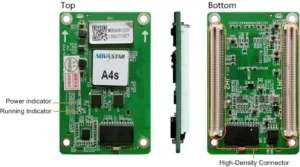
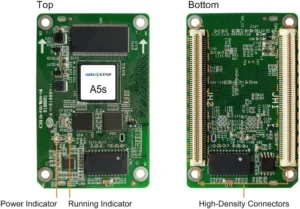
A 1G receiving card such as A10s Pro has a different receiver and cabinet architecture. It may be usable in some COEX-related control workflows, but it is not the XA50 Pro’s physical 5G/DDR3 substitute. For an existing 1G wall, keep the like-for-like receiver unless the cabinet maker has approved the full change of hub, modules, signal path, files and heat design.
XA50 Pro datasheet, firmware and VMP
Use the XA50 Pro resources to confirm the 5G cabinet architecture before a purchase or repair. The datasheet explains the card’s current capacity and thermal requirement; VMP is the COEX management route for the NCP package. Firmware is part of that matched receiver/cabinet environment, not a generic upgrade file.
Direct document: XA50 Pro Datasheet PDF.
NovaStar XA50 Pro FAQ
What is XA50 Pro used for?
It is a 5G COEX receiving card for a cabinet built around its DDR3 interface and NCP configuration. It is not a general replacement card for a 1G cabinet.
Can one XA50 Pro run a 1024 × 512 cabinet?
Yes, for a PWM-driver cabinet at 60 Hz with an 8- or 10-bit source, provided the approved module map and heat design match. At 12-bit, the documented one-card limit is 620 × 512.
Does XA50 Pro work with a 1G MRV or DH cabinet?
No, not as a drop-in card. XA50 Pro needs the matching 5G COEX/DDR3 cabinet architecture and configuration path.
What is an NCP file for XA50 Pro?
NCP is the COEX cabinet package used to manage the cabinet configuration and supported receiver features. Keep the approved NCP with the cabinet revision.
Can I send an XA50 Pro NCP only with VMP?
No. VMP manages it with COEX controllers, and NovaStar also documents sending NCP through NovaLCT 5.5 or later when the cabinet is used with MCTRL, H or VX systems.
Does XA50 Pro give every wall one-frame latency?
No. One-frame latency at the receiving-card end requires LED modules whose driver ICs have built-in RAM.
Does the card support free-angle rotation?
No. The current V1.0.3 document lists 90-degree rotation steps only. Any-angle rotation was removed from the product features in an earlier revision.
Why does the cabinet need a thermal plate?
The official document requires an aluminum heatsink plate larger than 250 × 250 × 3 mm or equivalent thermal performance. The receiver’s higher-density role has to be supported by the cabinet’s heat path.
Can I add dual-card backup to any XA50 Pro cabinet?
No. It requires two cards on one hub board and the related cabinet design. A single replacement card cannot create a backup system by itself.
Reviews
There are no reviews yet.